



12/12 vs 13/11 vs 14/10
This is the trial the supercycle idea came out of: inside a 24-hour day we ran out of night to sacrifice. The question it left open is being answered now in a pre-registered controlled trial, with four periods of 24, 26, 27 and 28 hours and clones paired across all four arms.
Trial Presentation
Cannabis, a plant with high medicinal and recreational importance, strongly depends on environmental conditions for its development, especially the photoperiod. Traditionally, indoor cannabis cultivation follows a standard photoperiod of 12 hours of light and 12 hours of darkness (12/12) to induce flowering.
However, recent research, such as the study by the University of Guelph, titled "Longer Photoperiod Substantially Increases Indoor-Grown Cannabis’ Yield and Quality", has indicated that extending light hours can substantially improve both yield and quality in modern genetics.
Based on this information, we designed this trial to evaluate the impact of a 13-hour light and 11-hour dark (13/11) photoperiod compared to the standard 12/12 in a traditional cultivation environment, comparing it also with experimental cycles like 14/10. We will evaluate its impact on resin production, cannabinoid content, and floral morphology.
Breaking Point: 14/10 → the idea that created the Supercycle
This insight was not the starting premise — it emerged during the trial and was formalized after observing the 14/10 stall (Day ~50). Within a fixed 24-hour day, we ran out of safe dark-time options. That dead-end raised the real question: why stay inside 24 hours at all?
Jump to Section 12This trial seeks to evaluate how extending the photoperiod can increase flower production by 30% to 50% in certain strains.
If confirmed, this advancement could revolutionize cannabis cultivation at various levels. For home medicinal growers, it would translate into higher yields and quality without requiring significant investments in additional infrastructure. For clubs with medicinal patients and industrial producers, it would open the possibility of optimizing production in the same spaces, reducing costs, and increasing access to high-quality flowers.
This research has the potential to bring about a significant change in the industry, making cannabis cultivation more efficient and accessible, with both economic benefits and improvements in yield and quality.
— MADE IN ARGENTINA
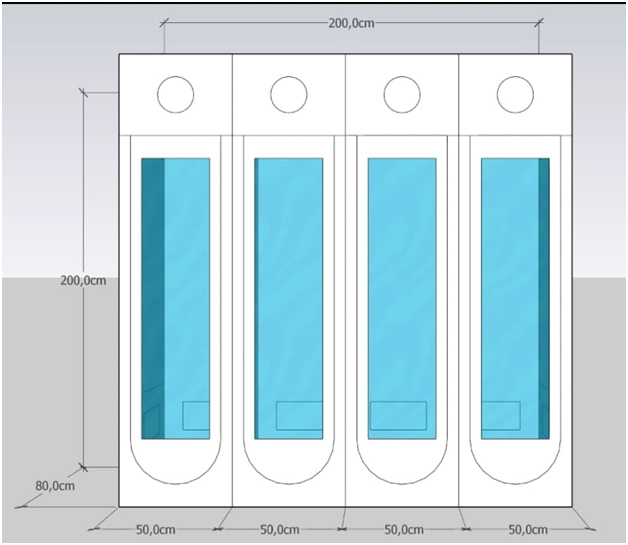
Experimental indoor setup for comparative analysis. Each area will have a different photoperiod to evaluate the effects of various light cycle regimes.
| Area | Photoperiod | Description |
|---|---|---|
| Area 1 (12/12) | 12h / 12h | Standard cycle used to induce flowering. |
| Area 2 (13/11) | 13h / 11h | Moderate increase in light exposure. |
| Area 3 (14/10) | 14h / 10h | Evaluation of prolonged light cycle. |
Vegetative Phase
In all experimental areas, a vegetative phase with continuous 24-hour light exposure will be maintained before switching to flowering to shorten total cultivation time.
Phytochrome and Light Responses
Phytochrome is a light-sensitive pigment that regulates the flowering cycle. It exists as Pr (inactive, darkness) and Pfr (active, light). During flowering, if Pfr remains active for longer (as in 13/11), it delays the signal to initiate flowering, allowing plants to accumulate more biomass and energy before fully entering the flowering stage. This does not revert the plant to vegetative growth but extends the floral development phase to produce larger, more resinous buds.
Photoperiods and Genetics
Cannabis has evolved in regions with different daylight durations. Indicas (Hindu Kush) are sensitive to short days. Sativas (equatorial) are adapted to long days. Breeding has created hybrids with intermediate sensitivities. In this trial, extended photoperiods (13/11, 14/10) allow us to leverage the phenotypic plasticity of these hybrids, extending flower development time without compromising the cycle, potentially increasing yields.

What Does The Paper Say?
The central hypothesis is that a 13/11 photoperiod will allow for a longer photosynthesis period, resulting in an increase in floral biomass and resin production, as well as a higher concentration of cannabinoids, without compromising final product quality.
Based on previous studies, it is expected that the 13/11 and 14/10 photoperiods will result in increased floral biomass and resin production. Specifically, an increase in THCA concentration is anticipated (~10% per University of Guelph study).
Dry Weight by Strain and Photoperiod
| Strain | 12/12 | 13/11 | Difference |
|---|---|---|---|
| Harambe | 32.3g | 42.3g | +31.3% (13/11) |
| Yeti | 26.0g | 37.6g | +44.6% (13/11) |
With the 13/11 photoperiod, an average increase of +37.2% in total dry weight was achieved compared to the classic 12/12 cycle.

Method used: HPLC-UV. Certified by IACA @iacalaboratorios.
Harambe Results
| Cycle | THCA | Δ9-THC | CBL |
|---|---|---|---|
| 12/12 | 96mg | 13mg | 2 |
| 13/11 | 200mg | 12mg | 1 |
Yeti Results
| Cycle | THCA | Δ9-THC | CBL |
|---|---|---|---|
| 12/12 | 171mg | 24mg | <1 |
| 13/11 | 198mg | 32mg | <1 |
The 13/11 cycle proved to be superior in THCA production for both strains. Harambe showed a dramatic increase of 108%, while Yeti had a more moderate increase of 15.8%.
The terpene analyses confirm that the 13/11 photoperiod had a positive impact on concentration.
Harambe Terpenes
| Terpene | 12/12 | 13/11 | Change |
|---|---|---|---|
| d-Limonene | 1.076 µg/g | 2.978 µg/g | +177% |
| β-Myrcene | 349 µg/g | 439 µg/g | +26% |
| Linalool | 841 µg/g | 36 µg/g | Decrease |
| β-Caryophyllene | 6.068 µg/g | 7.700 µg/g | +26.9% |
| α-Humulene | 1.847 µg/g | 2.341 µg/g | +26.7% |
| (+)-Nerolidol | 266 µg/g | 498 µg/g | +87.2% |
Yeti Terpenes
| Terpene | 12/12 | 13/11 | Change |
|---|---|---|---|
| d-Limonene | 2.059 µg/g | 2.222 µg/g | +7.9% |
| β-Myrcene | 3.833 µg/g | 3.101 µg/g | -19.1% |
| β-Caryophyllene | 3.933 µg/g | 11.028 µg/g | +180% |
| α-Humulene | 1.268 µg/g | 3.387 µg/g | +167% |
| (+)-Nerolidol | 251 µg/g | 357 µg/g | +42.2% |
Terpene Conclusions
The 13/11 photoperiod improved the production of key terpenes. Harambe showed major increases in d-Limonene, β-Myrcene, and β-Caryophyllene. Yeti showed notable increases in β-Caryophyllene and α-Humulene. These findings reinforce that small adjustments in photoperiod influence chemical expression.
Cannabinoid Analysis
Detailed analyses of cannabinoids and secondary metabolites were conducted in collaboration with specialized laboratories to compare final product quality.
Sensory Evaluation
Tastings were conducted to assess whether changes in lighting affected aroma, flavor, and perceived effects.
Cultivation Time Extension
The 13/11 cycle took approximately 6 extra days to finish.
| Photoperiod | Yeti | Harambe |
|---|---|---|
| 12/12 | 55d | 60d |
| 13/11 | 62d | 68d |
EC Observations
In the final stage, EC levels varied significantly. Yeti under 13/11 reached EC 3.5 (vs 1.6 in 12/12), indicating excessive nutrient demand/accumulation due to higher metabolic activity (increase in DLI and Pfr time).
Proposal for future: Use DWC systems with single tank for homogeneity.
DLI Comparison (900 PPFD)
| Photoperiod | DLI (mol/m²/day) | Change |
|---|---|---|
| 12/12 | 38.00 | 0 |
| 13/11 | 42.12 | +8.3% |
Rethinking the 14/10 Cycle
The 14/10 cycle was discarded on day 50 because the plants remained in an intermediate state. 10 hours of darkness prevented proper deactivation of phytochrome.
This highlighted a crucial limitation: lack of sufficient dark time.
Within the 24-hour framework, we had no more options. Then the question arose: Why limit ourselves to a 24-hour cycle?
Imagine a 30-hour day (17h light / 13h dark). This concept became the birth of the SUPERCYCLE.
Although the results of 13/11 are clear, questions remain:
How do other strains respond? (Pure Indicas/Sativas).
What is the impact on quality? We need more data to confirm long-term consistency.


This trial has the potential to provide new data on how precise control of the photoperiod and the incorporation of advanced lighting techniques can significantly improve the yield and quality of cannabis grown indoors. The results of this study will be published on supercannabis.ar.


