
The revolution begins when you stop asking how to do 12/12 better… and start asking why 12/12 was ever considered natural in the first place.

We’re breaking the circadian dogma, hacking time itself
Testing extended light/dark cycles called Supercycles. Early results, stronger growth, new morphologies, higher terpene and cannabinoid output
13/13 more resin terps & THC
14/14 new terps and mutations
16/16 unknow territory... yet
This is not a schedule. It’s evolution.
12/12 vs 13/14
Aura 86 • Same clone • Cut day 65 • These are the cola tips
Direct comparison of 12/12 (24 hours day) vs 13/14 (27 hours virtual day) side-by-side under identical conditions. Visual evidence of density, structure, and resin. This changes everything.
THIS IS BIGGER THAN CANNABIS
We didn’t just hack cannabis
we hacked TIME in plants.
Cannabis is simply the most entertaining testbed on the planet, but what
supercycles reveal goes far beyond weed.
For four decades, all indoor plant science was locked inside the
24-hour trap.
No one ever tested non-circadian temporal environments.
We are the first to open that door.
We’re not growers. We’re temporal hackers rewriting the rules of botany, using cannabis as the perfect playground to expose a hidden dimension of plant biology.
If you think this project is about “bigger flowers”, you’re already missing the point.
This is a new field of science.
Since the dawn of indoor cultivation we’ve been chained to the 24-hour day a human habit,
not a biological law.
Indoors we already control light, temperature, humidity, CO₂ so why not control time?
24-Hour Day
Premise: Earth’s day isn’t fixed at 24 hours, it grows a little longer every year. Lunar tides drain rotational energy, so the planet’s spin slows. This is a law of nature in the Earth–Moon system, not a human convention. Because of this, the circadian rhythm slowly shifts over geologic time. Life has already adapted to days shorter than 24h and it will keep adapting as they lengthen.
For half a century, indoor cannabis “optimization” never left the human 24-hour box. We tuned spectra, PPFD, and CO₂ but left time untouched. The clock became the ceiling.
The Sacrifice Law
More light means less darkness. Short nights can block phytochrome deactivation a key for healthy flowering. That’s why 14/10 or 13/11 often fail in some cultivars: too much day, not enough night. Flip it and you lose photons: longer nights steal DLI. Inside 24 h you must choose your wound.
Why research stayed inside 24h
Most cannabis studies compared 12/12, 13/11, 14/10… but always within a 24-hour frame. Add light hours → you steal night. Add night → you lose photons. The clock itself became the constraint.
-
Indoor cannabis yield/quality; photoperiods within 24 h.Cannabinoid yield can rise with longer photoperiods — still inside 24 h.13 h slowed initiation in some cultivars but increased final biomass; still a 24 h frame.24 h cage
-
NOW 2025Chronobotánica
break the 24-hour wallSupercycle: 13/13, 14/14, 15/15, 16/16 → 26–32+ h virtual days. Keep full dark and add photons.Outside 24 h
Scientific Hypothesis
Temporal Reprogramming
Extending the virtual day beyond 24 hours while preserving full, uninterrupted darkness forces plants to entrain to a longer beat. Under supercycles like 13/13, 13/14, 14/14, 15/15, we see a new equilibrium between daytime assimilation and deep-night resets, favoring trichome development, terpene biosynthesis, and stable, non-stress morphologies compared to 12/12 controls.
Time is a parameter, not a prison. We stopped obeying the Sun’s clock.
What we observe under supercycles
- Radical floral morphogenesis: bract/calyx multiplication, multi-stigma persistence, pine-cone–like stacking, shortened internodes, and hop like “lupulin” clustering under 15/15 16/16. beyond canonical phyllotaxis
- Architecture shifts across genotypes compact, bilateral stacks vs. exuberant proliferations depending on PPFD and cycle (e.g., 15/15 vs. 16/16), indicating a photoperiod × intensity interaction.
- 13/14Yeti strain shows the peak of Δ⁹-THC (≈ 186 mg/g) with increased expression of minors (CBG/CBN/CBC) vs. 12/12 and 13/11.
- 14/14 yields the highest total terpene load, with pronounced β-Myrcene, d-Limonene, and β-Caryophyllene signatures.
- 12/12 and 13/11 remain simpler profiles (THCA-dominant or delayed conversion), underscoring that the architecture of time is the driver not just “more light”.
- ⏳ 210 real days ≈ 170+ virtual nights.
- 🌑 Darkness preserved through both supercycles.
- 🌸 Continuous formation of new calyces and pistils.
- 🧪 Hypothesis: TOR suppression delays floral senescence.
Morphological Evidence
Yeti (Wedding Cake cut) / L. Cherry Fire
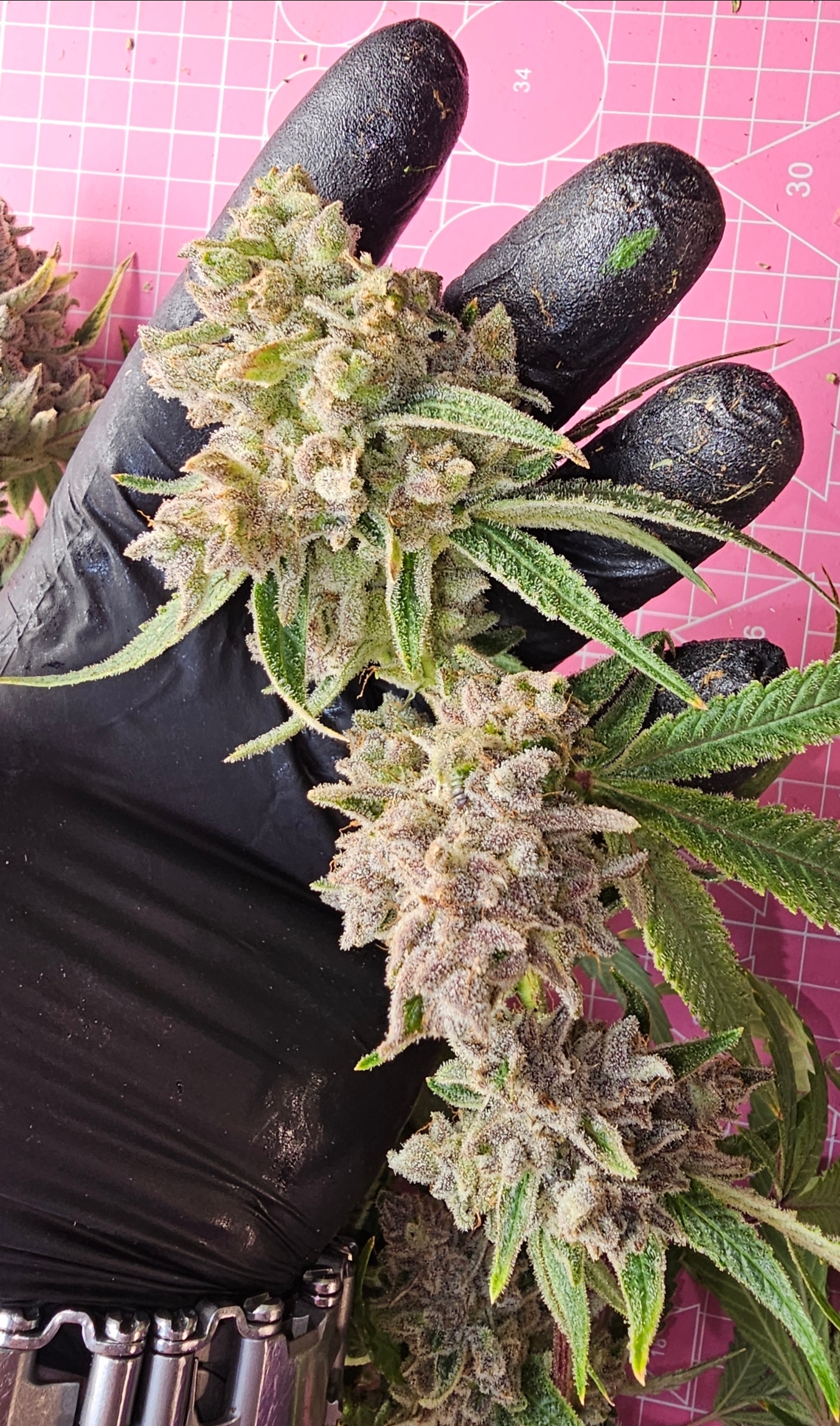
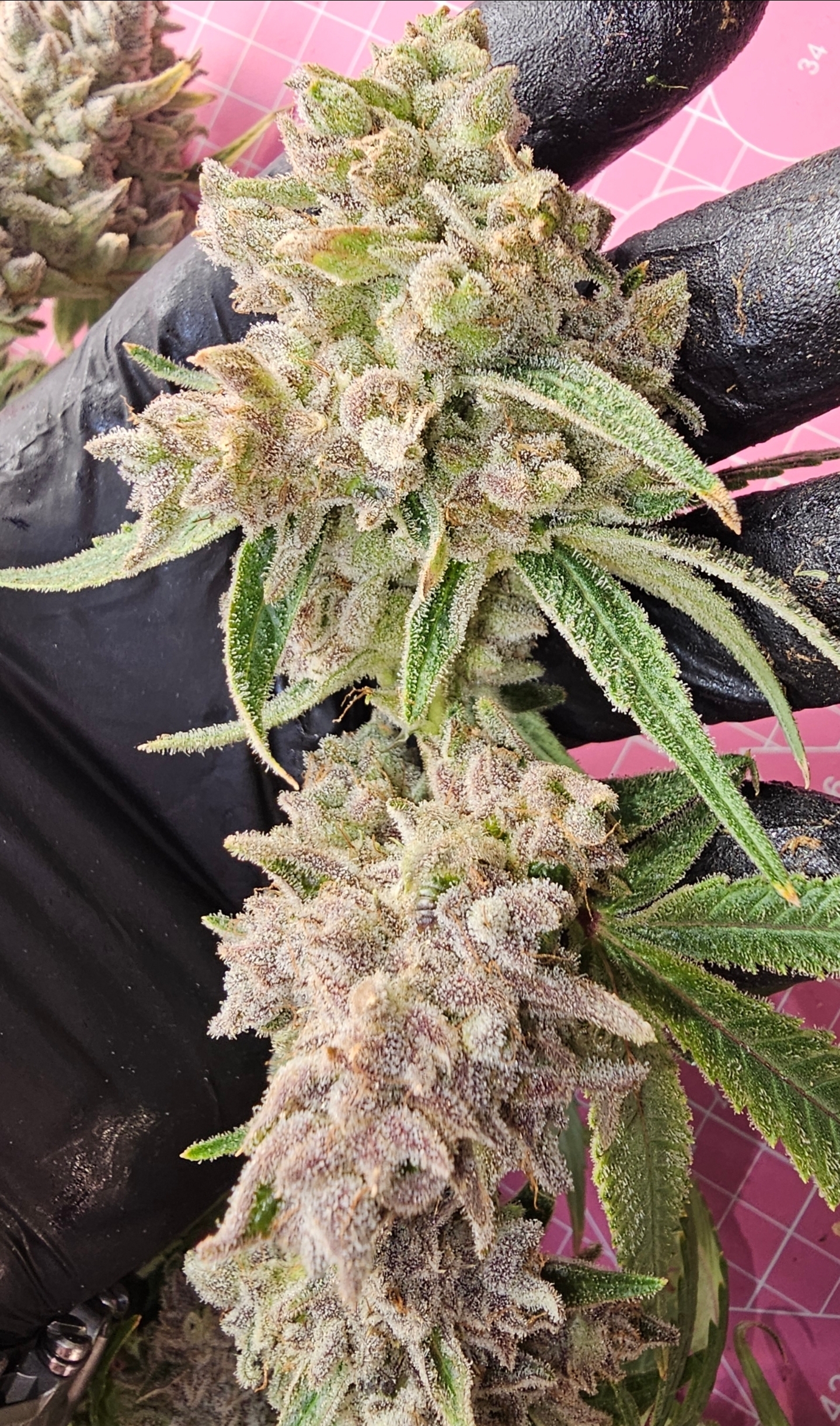
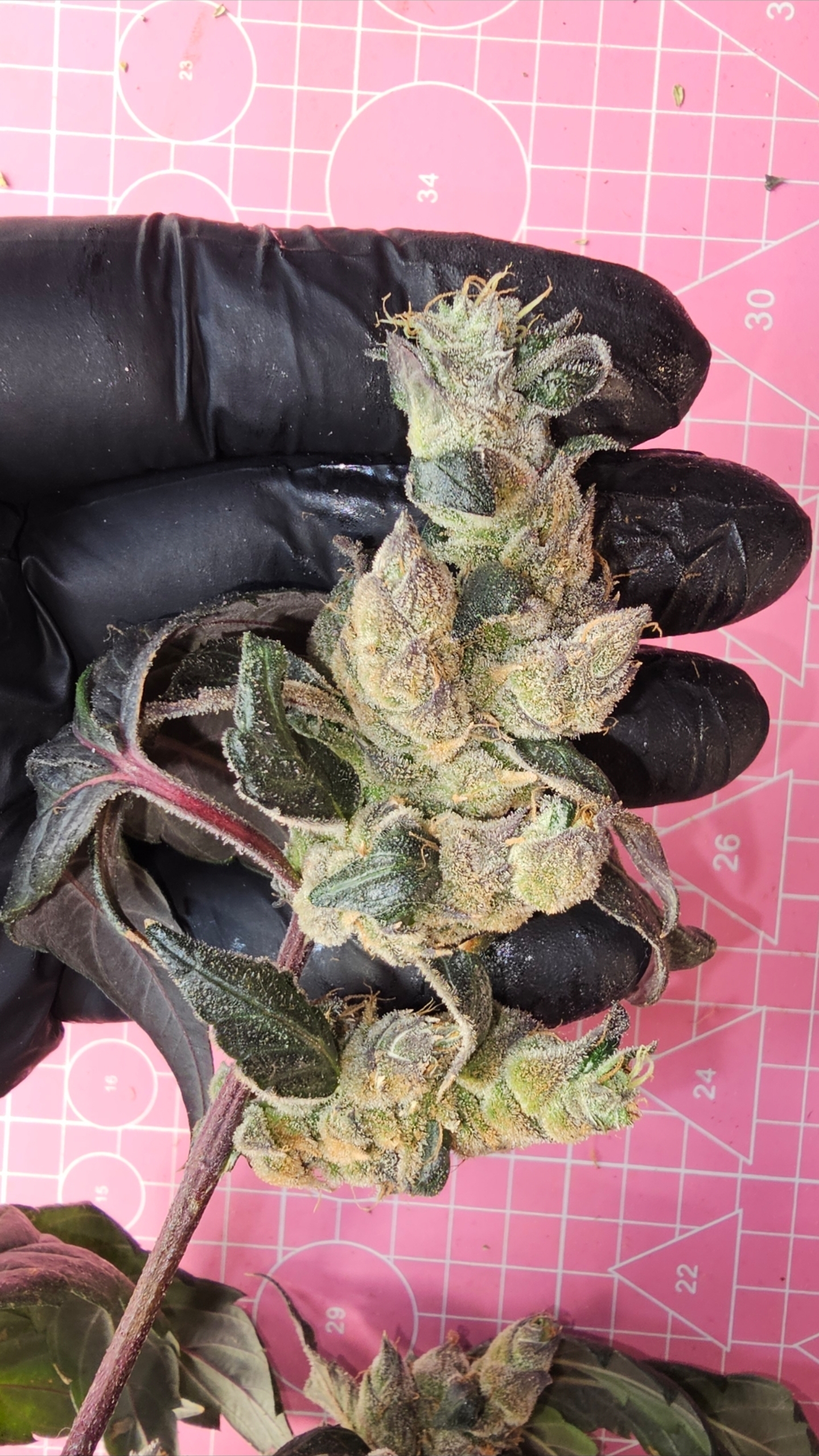
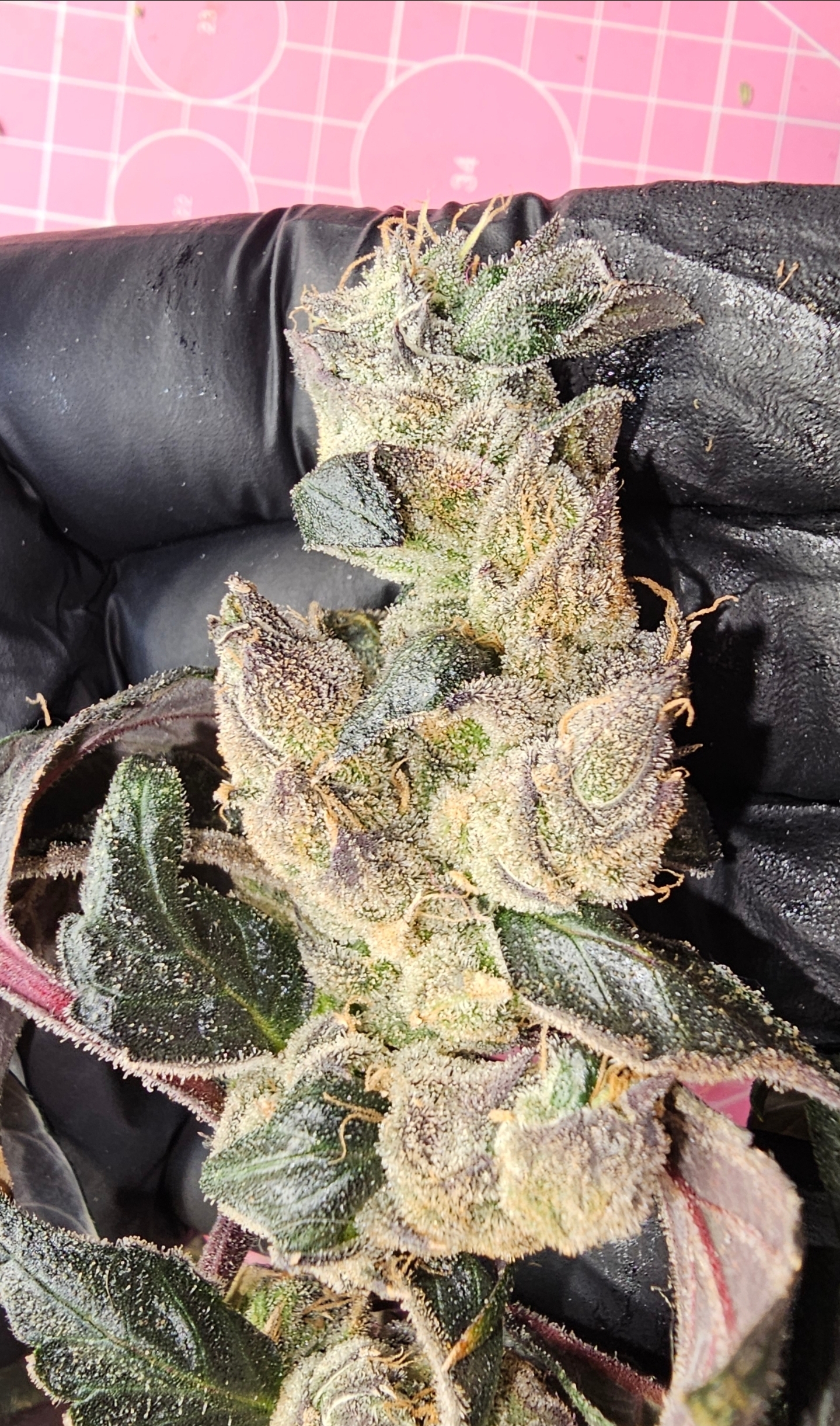
Temporal morphogenesis under 15/15–16/16 shows a consistent reprogramming of floral form bract stacking, multi-calyx multiplication, resin-laden satellite leaves, and persistent anthocyanins. Same genetics new time architecture.
“Each extended night resets the floral clock every cycle, a new calyx is born.” ⚡ Biology rewritten. Darkness preserved.
Symmetric Foxtailing
Supercycle 15/15
Dual timelapse capture showing ordered foxtailing and trichome expansion in 15/15 cycles. Each axis mirrors hormonal re-entrainment chaos becomes symmetry.
Significant chemical shifts
Supercycles reshape cannabinoid/terpene profiles in distinct, repeatable patterns (same genetics, different time architecture):
Hack the photoperiod → unlock non-canonical chemistry.
The Zombie State
After ~200 real days (≈161 supercycles) under 14/14→15/15, a specimen remained alive and non-senescent, continuing rudimentary floral production, a chronic loop absent in 12/12. We define this Zombie State as prolonged floral persistence without termination, likely tied to altered GA/ethylene balance and deep temporal dysregulation. Upper branches (higher PPFD) showed necrotic, malformed masses; lower branches stayed vital on same photoperiod, different intensity → same state, different expression.
Persistent Flowering
“Zombie” Phenotype
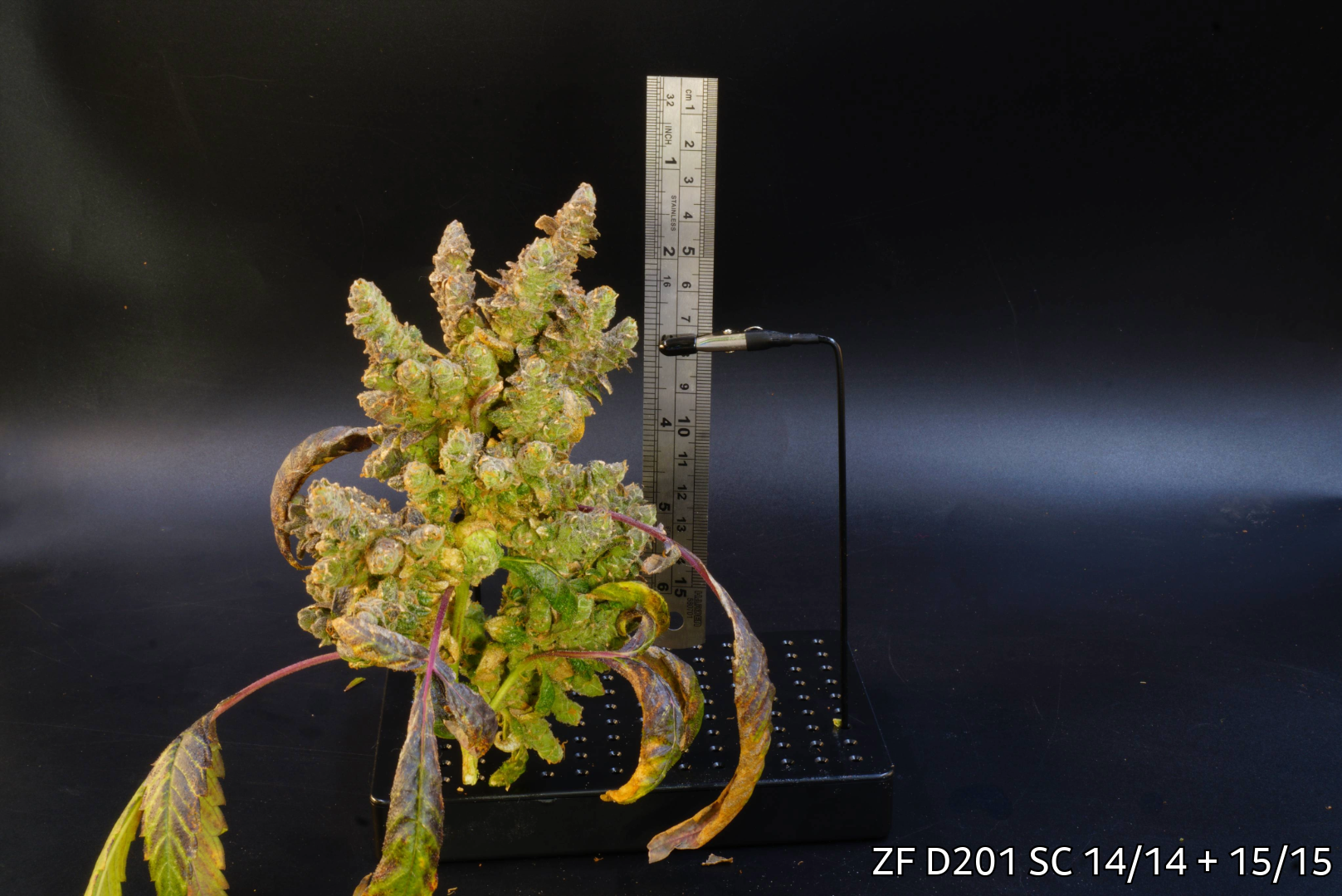
This specimen remained metabolically active for over 210 days of flowering across two consecutive supercycles (14/14 + 15/15), continuously generating new floral primordia without entering senescence.
The phenomenon termed the “Zombie Flower” represents a persistent reproductive state where temporal checkpoints of floral aging are suspended. Despite nutrient depletion and advanced pigmentation, the meristem remained active, producing new stigmas, fresh trichomes, and viable ovules.
We interpret this as a disruption of the canonical TOR–SnRK1 balance and circadian coupling, creating a metabolic limbo where senescence genes (SAGs) are not fully expressed. In other words: time stopped, but life didn’t.

Project Status
Supercannabis Collective Hack
This is a group hack. We started at the end of 2024, trying to break the 24-hour barrier, and we’re still discovering what’s really happening.
The Supercannabis Legion is a network of growers, hackers and researchers experimenting with extended light/dark cycles. Together, we are documenting:
Timeline
Cronobotanica A live timeline with discoveries and experiments.
YouTube
La Huerta del Diablo Weekly videos on our YouTube channel showing what we’re uncovering.
Telegram
SuperCannabisAR Legion A Telegram group where every day the Legion shares new data and theories.
This project is alive hypotheses evolve, setups change, and every new result rewrites what we know about plant time. You can replicate, join, or contribute your own data.

For the last four decades of indoor breeding, cannabis has been selected almost exclusively under 12/12 inside a 24-hour time cage. That is not biology. That is human convenience promoted to dogma.
1 — You didn’t “refine” the gene pool. You time-locked it.
Decades of selection in a single temporal regime created a narrow temporal bottleneck. Only genotypes that behave correctly in 12/12 were propagated. Any architecture that required alternative day lengths or extended nights was silently discarded.
You did not lose your best genetics you simply never allowed them to express under the right temporal conditions.
2 — Supercycles reveal hidden variation you never tested
When the same genotype is run in 12/12, 13/13, 15/15, 16/16, we see strong Genotype × Temporal Environment effects:
some plants enter hyper-floral, giant morphologies, some shift internodal patterns and resin density, others show minimal change. This is not “more light = more yield” it is a different hormonal program being engaged by a different temporal structure.
If all plants reacted the same way, this would just be DLI.
They don’t. G×E
3 — 13/13 is the litmus test for real genetic potential
Across multiple cultivars, 13/13 consistently behaves as a sweet spot close enough to 12/12 to be compatible with legacy breeding, but far enough to expose new expression patterns.
If a line shows a clear improvement in 13/13 versus 12/12, it means the historical selection environment was sub-optimal for that genotype. The plant had more to offer, the clock never let it show.
4 — Some genetics are supercycle monsters. Start hunting them.
Under 14/14, 15/15, 16/16 we observe genotypes that maintain structural integrity, increase resin output, and enter prolonged non-senescent “zombie” states instead of collapsing. These are not stress artifacts, they are alternative temporal strategies.
A strain that is “top tier” in 12/12 may be mediocre under 16/16, while a forgotten sibling line becomes a supercycle elite. Your ranking of “good genetics” is not absolute it is clock-dependent.
5 — The next wave is Supercycle Breeding
If you are still selecting only in 12/12, you are optimizing plants for an artificial human schedule, not for their full temporal plasticity. Supercycle breeding means:
selecting for fast adaptation to new day lengths, for stable morphology under extended nights, and for sustained resin and metabolite production in 13/13 16/16 instead of collapse or premature senescence.
The question is no longer whether 12/12 works.
It clearly does. The real question is:
What happens when you stop breeding inside a 24-hour cage and start selecting plants that only reveal their full architecture under supercycles?
Those genotypes already exist. Supercycles don’t create them>b> they expose them.

Breaking the 24-Hour Barrier
Creating a Supercycle no longer requires hacking time the configurator already explains every rule. Below is a short summary of the methods available today and the ones that are still coming soon.
Available Today
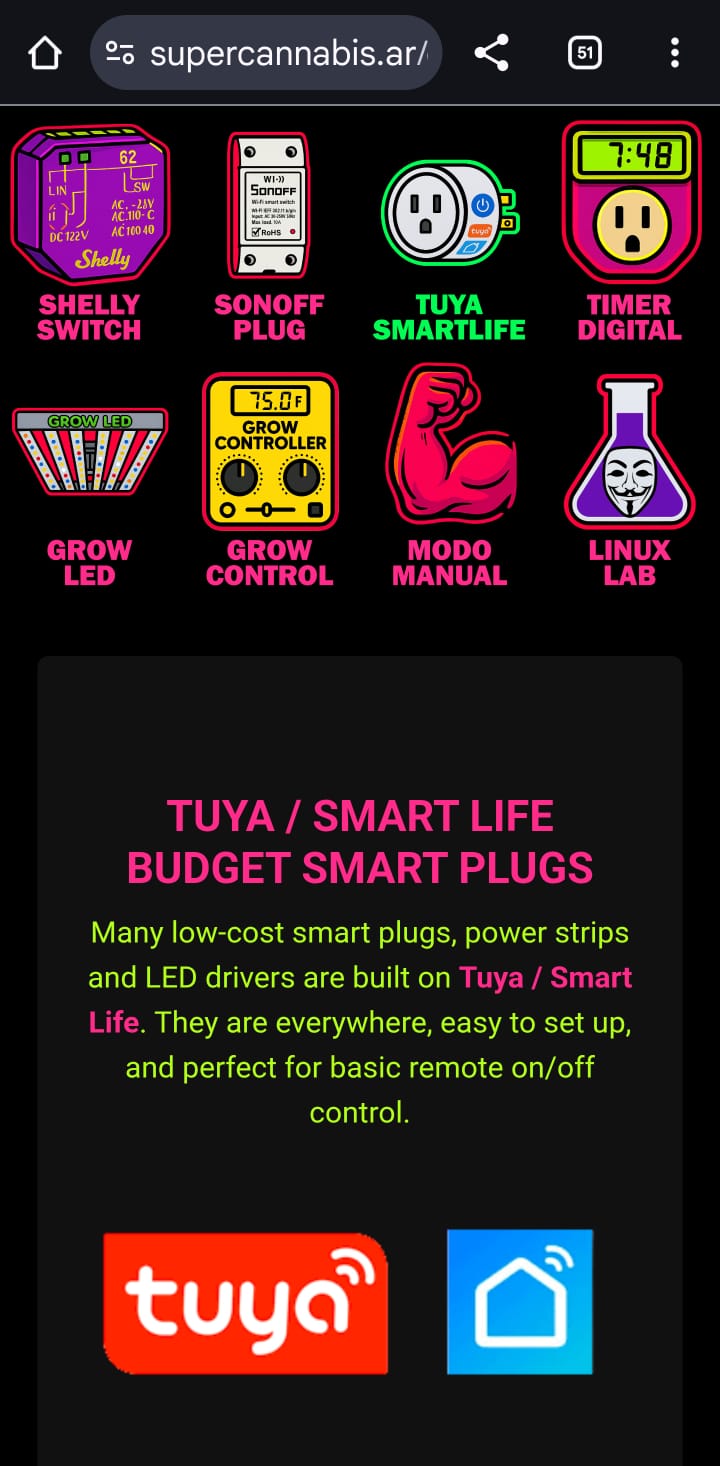
• Smart plugs (Shelly / Sonoff / Tasmota)
Supports custom cycles such as 13/13, 14/14, 16/16.
Upload ON/OFF hours once and the device keeps perfect absolute time.
• Tuya / Smart Life for Windows (SuperCiclo by h4ch3)
Desktop controller for Tuya plugs.
Generates and executes full Supercycle schedules directly.
• Digital Timers (temporary)
Useful only as a fallback. They drift and require frequent re-sync.
The configurator includes a timing correction table.
Design Your Own Supercycle
Break the 24-hour prison.
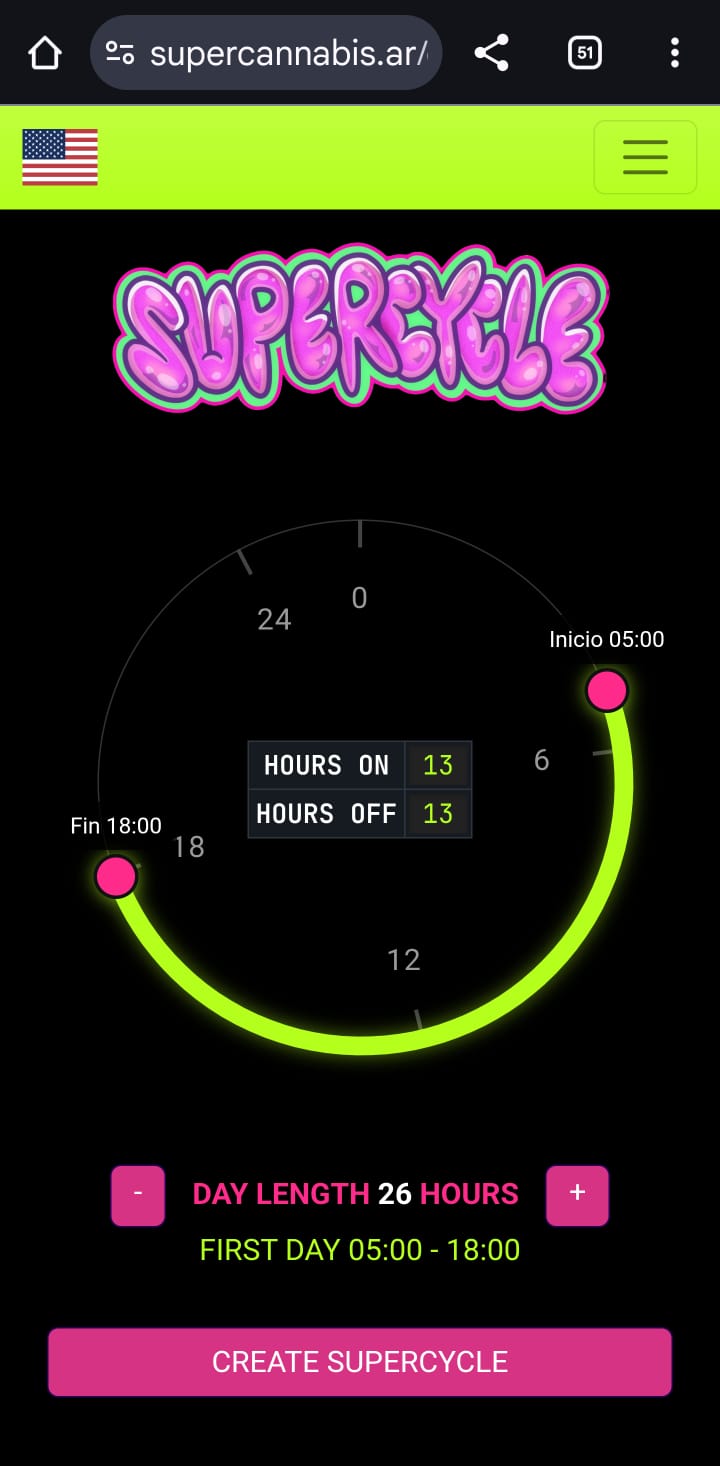
The Supercycler lets you build your custom temporal cycle — 13/13, 15/15, 16/16, asymmetric 13/14, sunrise hacks, extended nights, whatever you want. Generate your full schedule in seconds.
“You control time. Your plants follow.” ⚡ Enter the Supercycle. Rewrite biology.
Generate your complete schedule, calculate offsets and visualize the timing table for any Supercycle.
Coming Soon / Not Available Yet
• Mobile Supercycle App (Android / iOS)
One app to control Shelly, Sonoff, Tuya and LAN-only devices.
• Full Room Controllers (DIN-rail)
Industrial-level lighting for multi-light rooms.
Waiting for commercial partners to support true absolute-time cycles.
• Local Supercycle Hub
A cloud-free local server for full independence. In development.
We openly invite LED manufacturers
and commercial controller companies
to join the Supercycle standard.
All methods follow one rule: use absolute time never a 24 h repeat. That is the foundation of a true Supercycle.
MENU
ANOTHER BAD IDEA FROM

STUDY AUTHORIZED BY

REFERECE AND INSPIRATION
ResearchGate: Longer Photoperiod Substantially Increases Indoor-Grown Cannabis’ Yield and Quality.
MAIN SPONSOR

WHE NEED SPONSORS 😀
SUPERCYCLE by I.V.
is licensed under Creative Commons Attribution-NonCommercial-ShareAlike 4.0 International


a TNSC Co. project